How Much Decking Timber Do You Actually Need? An Ordering Guide For Byron Bay Projects
Working out how much
decking to order is where most deck projects either get it right or end up with a trip back to the timber yard mid-build. The conversion from square metres to linear metres catches people out every time, and in Byron Bay's coastal conditions there are a few extra details — about species choice, delivery timing and acclimation — that affect how the order needs to be structured. This guide works through it all with a real example so you can arrive at a number before you call for a quote.
Step One: Know Your Deck Area and Board Width Before You Start
The calculation starts with two numbers: the area of the deck in square metres and the board width you are using.
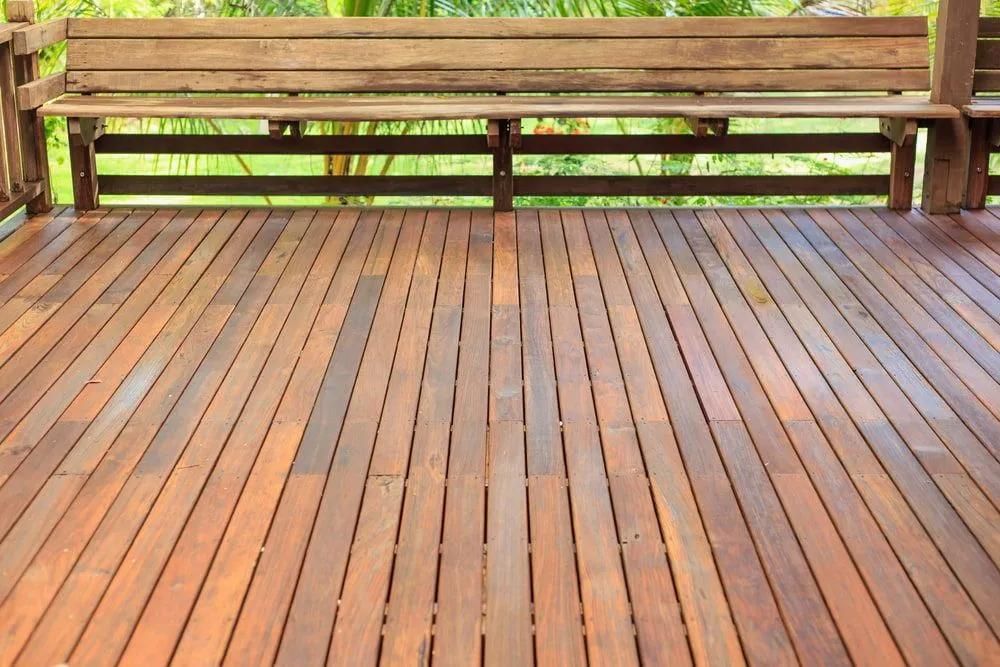
Board width shifts your total more than any other decision, so settle on your timber decking profile before you start converting square metres to linear metres. The most common decking profiles in the Northern Rivers:
- 86mm boards (70mm cover width after allowance for the gap between boards)
- 90mm boards (approximately 75mm cover width)
- 140mm boards (approximately 130mm cover width)
The gap between boards — typically 5 to 6mm — means the board's cover width is less than its nominal width. This gap accounts for a meaningful portion of your total, particularly on larger decks.
The Linear Metre Calculation: A Real 20m² Example
Here is the full conversion for a standard 20m² deck using 86mm boards with a 5mm gap:
- Cover width per board: 70mm (86mm minus allowance for the rebate profile)
- Boards needed per linear metre of deck length: 1 metre ÷ 0.070 = approximately 14.3 boards per metre of width
- For a 4m × 5m deck (20m²): deck is 4m wide, so you need 4 ÷ 0.070 = approximately 57 boards running the 5m length
- Linear metres of board: 57 boards × 5m = 285 linear metres
Before waste, a 20m² deck in 86mm boards needs approximately 250 to 290 linear metres of decking, depending on the exact profile and gap. Add a 5 to 10 per cent cutting waste allowance on top — 10 per cent if you have a lot of angles, trimming around posts or steps; 5 per cent for a straightforward rectangular deck.
Summary for a 20m² deck in 86mm boards:
- Base quantity: approximately 270 linear metres
- With 7.5% waste: approximately 290 linear metres
For wider boards the total drops considerably. The same 20m² deck in 140mm boards with a 6mm gap uses approximately 175 linear metres before waste. Board width is the most powerful lever you have on both the order quantity and the final cost per square metre.
What Timber to Use for Decking Boards in Byron Bay
Byron Bay and the broader Northern Rivers coastline is a harsh environment for timber. Salt air, high humidity, heavy summer rainfall and strong UV exposure accelerate the weathering and checking of poorly specified timber, and any board that holds moisture against the framing will cause corrosion issues over time.
For exposed coastal decks within a few kilometres of the ocean, hardwood is the appropriate specification:
- Spotted gum is one of the most commonly used hardwood decking species in coastal Queensland and northern NSW. It is dense, stable, and takes on a silver-grey patina if left uncoated or holds oil well when maintained
- Blackbutt is a reliable alternative with good hardness and a slightly lighter appearance
- Ironbark and tallowwood are also used where durability is the primary consideration
Treated pine is used for framing in most residential deck builds — more on that below — but for the decking surface itself, hardwood is the correct choice for a coastal Byron Bay deck that is expected to last.
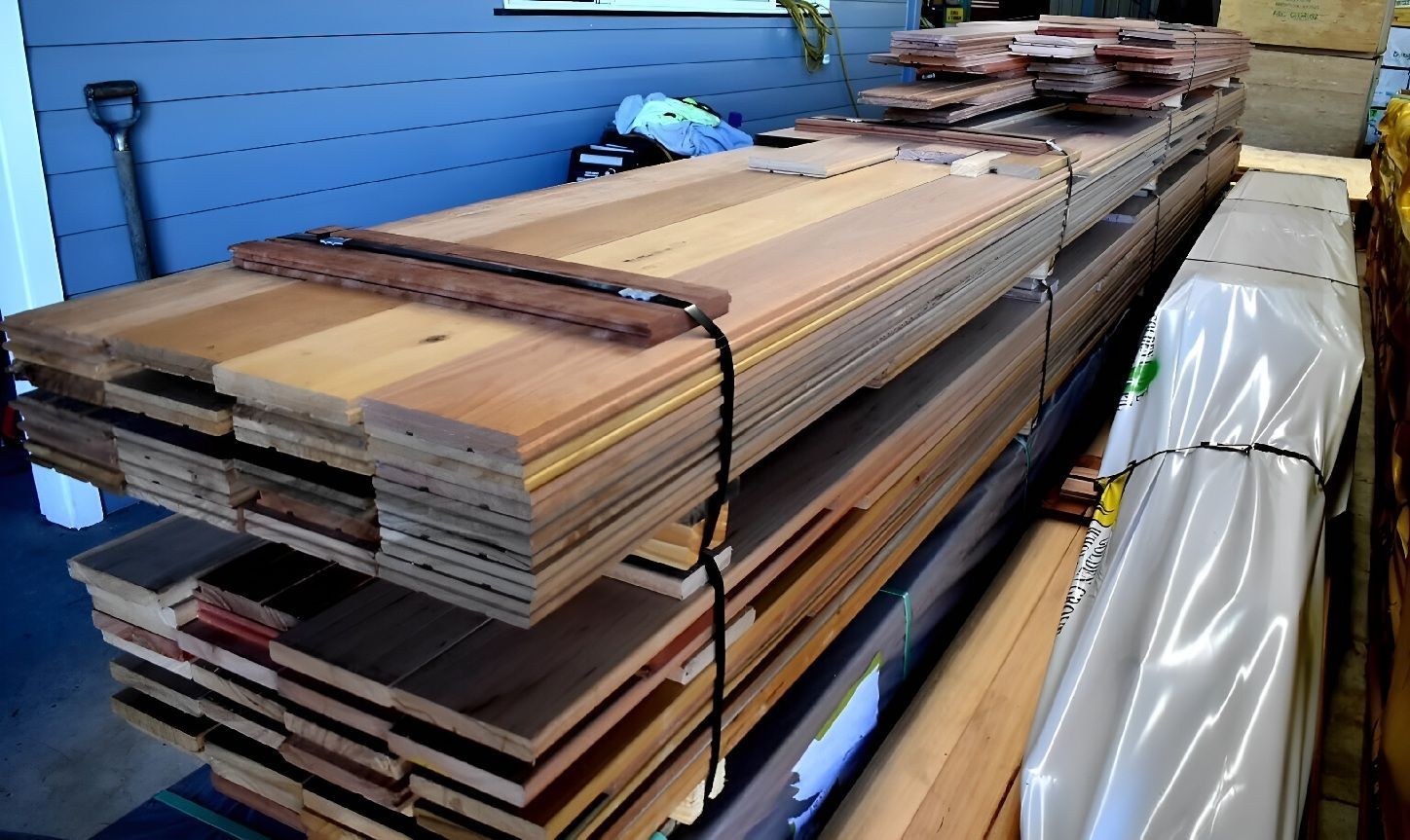
Hardwood decking is sold by the linear metre in set or random lengths. Random length packs are typically more cost-effective for larger orders; set lengths suit smaller decks or situations where waste from cutting needs to be minimised. Clarify which you are ordering before calculating waste.
Framing: What Size Timber to Use for Joists and Bearers
The framing beneath the deck determines structural performance and long-term stability. For most residential decks in Byron Bay:
Bearers carry the load from the joists to the posts or stumps. Common bearer sizes for spans up to 1.8 to 2.4 metres are 190 × 45mm or 240 × 45mm treated pine or hardwood, depending on the span table for your specific load and spacing.
Joists span between bearers and support the decking boards directly. For joist spacing of 450mm centres (standard for hardwood decking), 90 × 45mm or 140 × 45mm treated pine is typical for spans up to 1.8 metres. Wider spans require deeper sections — consult your local council or a structural engineer for any deck requiring a building permit.
Joist spacing matters for hardwood decking. Hardwood boards are denser and stiffer than treated pine, which means they bridge spans better, but 450mm joist spacing is the standard for most hardwood profiles. Wider spacing can lead to flex and bounce underfoot, particularly with narrower boards.
For framing quantities, calculate the number of joists by dividing the deck length by the joist spacing and adding one — for a 5m deck at 450mm centres, that is 12 joists. Bearer quantities depend on the post spacing and the structural design. Framing timber is ordered in lengths and cut to size on site.
The Coastal Detail Most People Miss: Acclimation Before Fixing
Hardwood delivered to a Byron Bay site needs time to adjust to the local conditions before it is fixed. In the humid Northern Rivers environment, timber delivered directly from a dry warehouse and fixed immediately will move after installation — boards can cup, gap or raise — as the moisture content adjusts to site conditions.
The standard practice is to sticker the timber on site for approximately one week before fixing. Stickering means standing the boards horizontally on level bearers with spacers (stickers) between each board to allow airflow on all faces. This allows the timber to reach a stable moisture content in the actual conditions it will live in.
This has a practical implication for order timing: the timber needs to arrive at the site roughly a week before framing is complete and ready for the boards to go down. Building that lead time into the project schedule avoids the temptation to fix boards straight off the delivery truck.
Order a few spare boards while you are placing the order. As we cover in Timber Care Tips for Maintaining a Long-Lasting Coastal Deck, the boards closest to the weather are always the first to need replacing, and having matching timber on hand years later is not always straightforward.
Putting the Order Together
Once you have the linear metre totals for decking boards, the lengths and quantities for joists and bearers, and the hardware list for fixings and connectors, the order is ready to quote.
Once you have your linear metre total, our team can check it against stock and current pricing for timber supplies Byron Bay builders order every week — including whether random or set length packs are the better fit for your quantities.
A full deck order is easier to stage than to store, so talk to us about timber delivery to site in one drop or split across two to match your build schedule.
Contact Budget Timbers to discuss your order before the project starts.